
LangSmith vs Langfuse vs Arize Phoenix vs Braintrust: LLM Tracing and Evals Compared
By ReviewRamble editors ·
Quick verdict
Langfuse is the default for most teams: framework-neutral, MIT at its core and nearly complete when you host it yourself. LangSmith is the better buy if your agents are built on LangGraph and you can live with per-seat pricing. Arize Phoenix has the strongest open evaluation loop, under a licence that bars reselling it as a service. Braintrust is the one to pick when the question you ask every day is whether the last change made answers better, not what happened inside one request.
Comparison at a glance
| LangSmith | Langfuse | Arize Phoenix | Braintrust | |
|---|---|---|---|---|
| What it is first | Tracing and evals for LangChain and LangGraph, plus agent hosting | Open-source tracing, prompts and evals | Open-source tracing and experiments | Evaluation platform with logging attached |
| Licence | Closed | MIT core; ee/ folders commercial | Elastic License 2.0 | Closed |
| Self-hosting | Enterprise only | Free, near-complete | Free | Enterprise data plane in your cloud |
| Billed by | Seat plus traces | Units (traces, observations, scores) | Spans and GB on Arize AX | GB processed plus scores |
| Free tier | 1 seat, 5,000 base traces a month | 50,000 units a month, 2 users | Self-host; AX Free 25,000 spans | 1 GB, 10,000 scores, unlimited users |
| First paid plan | Plus, $39 per seat a month | Core, $29 a month | AX Pro, $50 a month | Pro, $249 a month |
| Default retention | 14 days base, 180 extended | 30 days Hobby, 90 Core, 3 years Pro | 15 days AX Free, 30 AX Pro | 14 days Starter, 30 Pro |
Four tools, two different questions
An agent gives a customer a wrong refund amount after eleven steps. One question is what happened: which tool call returned the stale price, which prompt version was live, how long each step took. The other question comes a week later: after you fix the prompt, are answers across your whole test set better, or did you break something else?
All four products answer both questions now, but each was built around one of them. LangSmith and Langfuse started as tracing tools and grew evaluation. Phoenix grew out of Arize's model-monitoring work and treats experiments as the centre. Braintrust started from evaluation and added production logging so bad answers become test cases. That origin still shapes where each is strongest.
Pricing, as of 26 November 2026
LangSmith. Developer is free for one seat and 5,000 base traces a month. Plus is $39 per seat a month with 10,000 base traces included, then pay-as-you-go in LangChain Standard Units at $1 each; seats are charged on the 1st and removed seats are not credited. Enterprise is custom and invoiced annually. Base traces are kept 14 days and extended traces 180 days on every plan, and the upgrade to extended carries a fee the pricing page does not state. Startups can apply for up to $10,000 in credits.
Langfuse Cloud. Hobby is free with 50,000 units a month, 30 days of history and two users. Core is $29 a month, Pro $199 and Enterprise $2,499, each with 100,000 units included and graduated overage: $8 per 100,000 units up to 1 million, $7 to 10 million, $6.50 to 50 million and $6 above that. Langfuse's own example puts 5 million units a month on Pro at $551. Pro's Teams add-on, which brings enterprise SSO and fine-grained roles, is $300 a month. Self-hosting is free.
Arize Phoenix. The open-source app costs nothing to run yourself. The managed service is Arize AX: Free gives 25,000 spans and 1 GB a month with 15-day retention; Pro is $50 a month for 50,000 spans, 10 GB and 30 days; Enterprise is custom and the only tier that can be self-hosted. Every AX plan has unlimited users and evals. The pricing page lists no overage rates.
Braintrust. Starter is free with 1 GB processed and 10,000 scores a month, then $4 per GB and $2.50 per 1,000 scores, with 14-day retention. Pro is $249 a month for 5 GB and 50,000 scores, then $3 per GB and $1.50 per 1,000 scores, with 30 days kept and up to 180 days at $0.50 per GB a month. Enterprise is custom. Every plan has unlimited users, and qualifying startups can get Pro free for 6 to 12 months.
The billing units point at different bills. A ten-person team on LangSmith Plus pays $390 a month before a single extra trace; the same team pays $29 on Langfuse Core or $249 on Braintrust Pro, because neither charges per person. An agent that writes long traces with large documents in them grows a Braintrust bill by the gigabyte, and scoring every production request with a model-as-judge grows it by the 1,000 scores. Model a real month in each vendor's unit before you compare headline prices.
LangSmith
LangSmith understands LangGraph's structure natively, so a trace shows nodes, state and checkpoints as the framework sees them rather than a flat list of model calls. Its datasets, annotation queues and evaluators are mature, and it is the only one of the four that also deploys the agents it observes. OpenTelemetry ingestion means it now accepts traces from code outside LangChain.
Strengths: the deepest LangGraph view; evaluation and human review in one place; agent hosting on the same account.
Weaknesses: per-seat pricing punishes larger teams; no self-hosting below Enterprise; 14-day base retention means anything you need later must be copied into a dataset. Deployment is metered separately in LangChain Standard Units, which our LangSmith review covers in detail.
Langfuse
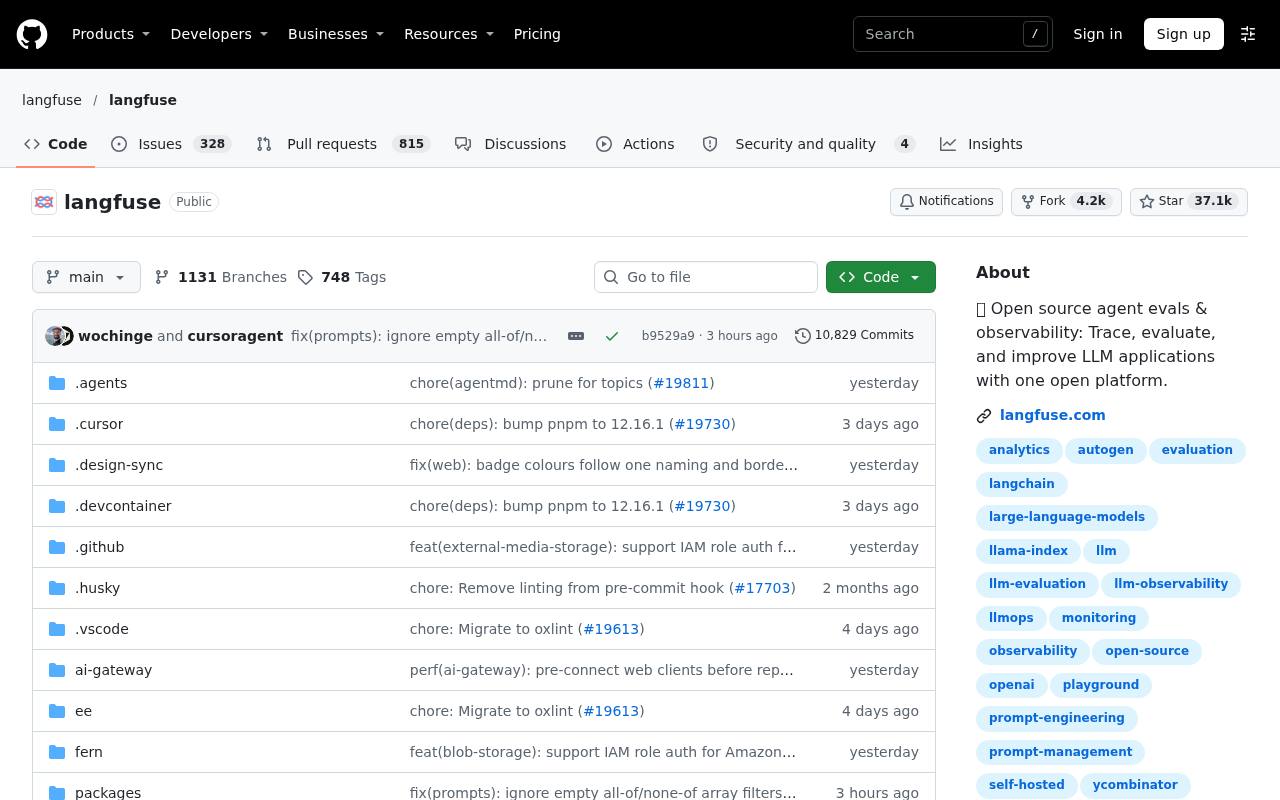
Langfuse is the safe default for a team without a framework allegiance. The free self-hosted build covers tracing, prompt management, evaluations, dashboards and even Okta or Entra SSO with no licence fee, and the cloud is priced down to the unit. It shipped v4.86.0 on 24 November 2026 and has about 37,800 GitHub stars. ClickHouse bought the company, which changed how self-hosted Enterprise is sold rather than how the MIT core is developed.
Strengths: self-hosting that is close to the full product; usage pricing with no seat charge on paid cloud plans; works with any framework or plain SDK calls.
Weaknesses: running it yourself means Postgres, ClickHouse, Redis and object storage, and the docs call Docker Compose fit for testing only. Audit logs, retention policies and project-level permissions sit behind the Enterprise licence, exactly where regulated buyers look first.
Arize Phoenix
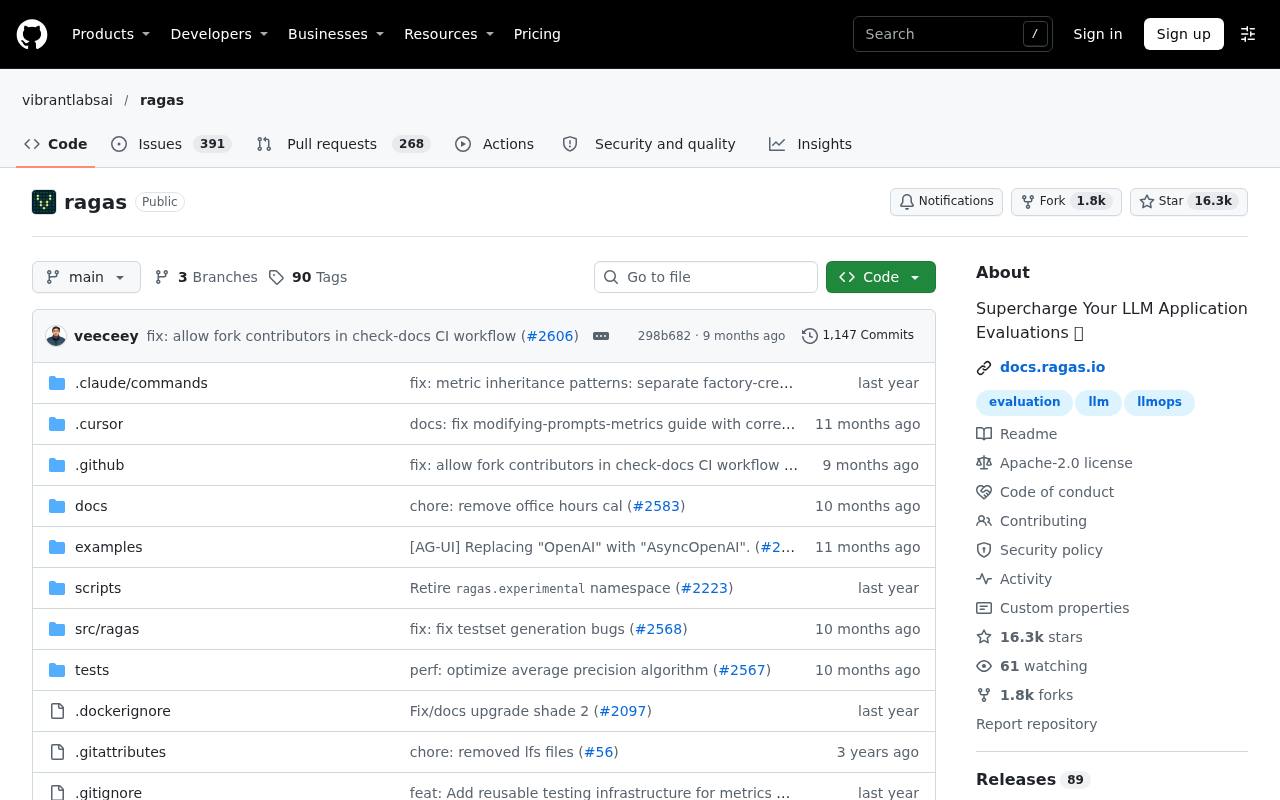
Phoenix is strongest when improving quality is the job. Datasets built from traces, experiments that rerun them against a new prompt or model, and evaluators from libraries such as Ragas and DeepEval make it a working bench rather than a dashboard. Its traces use OpenTelemetry and Arize's OpenInference conventions, so instrumentation is not tied to Phoenix. Dynatrace completed its purchase of Arize on 1 October 2026 and says Phoenix will continue to be supported; the repository has about 12,400 stars and kept releasing through November.
Strengths: the best open evaluation loop of the four; open instrumentation; one command starts the whole app.
Weaknesses: defaults need fixing before production (SQLite in a temporary folder, authentication off); the Elastic License 2.0 forbids offering it as a hosted service, which Langfuse's MIT core does not; AX's cheap plans run out quickly at 25,000 and 50,000 spans. Our Arize AX review covers the managed side.
Braintrust
Braintrust puts test runs, saved test sets, scoring rules and live scoring in one data model, so a bad production answer becomes a test case in a few clicks and the same scorer runs in CI before a merge and against live traffic after it. Unlimited users on every plan suit a product organisation where designers and support leads review outputs alongside engineers.
Strengths: the tightest loop from production failure to regression test; no seat pricing; a self-hosted data plane on AWS, GCP or Azure for Enterprise customers.
Weaknesses: the server is not open source; keeping traces in your own cloud needs an Enterprise contract; the $249 jump from free to Pro is the steepest of the four; heavy tracing and judge-scoring both meter quickly.
Winner by use case
- You build on LangGraph or LangChain: LangSmith. Nothing else reads LangGraph state as well, and it can host the agent too.
- You want to own your traces, or have no framework: Langfuse, self-hosted or on Core.
- Your team runs experiments on prompts and models weekly: Arize Phoenix, self-hosted, with AX if you would rather not run it.
- Your hardest question is "did this change help?" and many non-engineers review outputs: Braintrust.
- A ten-person team on a tight budget: Langfuse Core at $29 a month, or any of the three open or seat-free options before LangSmith Plus at $390.
- Regulated data that must stay in your cloud: self-hosted Langfuse or Phoenix; Braintrust and LangSmith both need Enterprise for that.
How to choose without regret
Instrumentation is the part that is expensive to change, so emit standard OpenTelemetry spans wherever you can and keep the backend replaceable. Then run a two-week trial: send the same week of real traffic to two finalists, build one test set of 50 to 200 real examples, and score a prompt change in each. The tool whose failure view your team actually opens on day ten is the right one. Our observability guide and evaluation guide cover the wider field, including Opik and Weave.
FAQ
Is Langfuse really free to self-host?
Yes for the MIT core, which covers tracing, prompts, evaluations, dashboards and SSO. Features in the ee/ folders, such as audit logs and retention policies, need an Enterprise licence. You still pay for the servers and the time to run Postgres, ClickHouse, Redis and object storage.
Can I use LangSmith without LangChain?
Yes. LangSmith accepts OpenTelemetry traces and has its own SDKs, so plain OpenAI or Anthropic calls work. Its advantage over the others is largest inside LangGraph, though, so outside it you are paying per seat for depth you will not use.
Is Arize Phoenix open source?
It is source-available under the Elastic License 2.0. You can run and modify it for your own use free of charge, but you may not offer it to others as a hosted service. Since October 2026 Arize, and with it Phoenix, belongs to Dynatrace.
Which is cheapest for a large team?
The seat-free ones. Langfuse, Arize AX and Braintrust all have unlimited or uncharged users on paid plans, so a 40-person team pays the same platform fee as a four-person one and the bill follows data volume instead.
Do I need a separate evaluation tool as well?
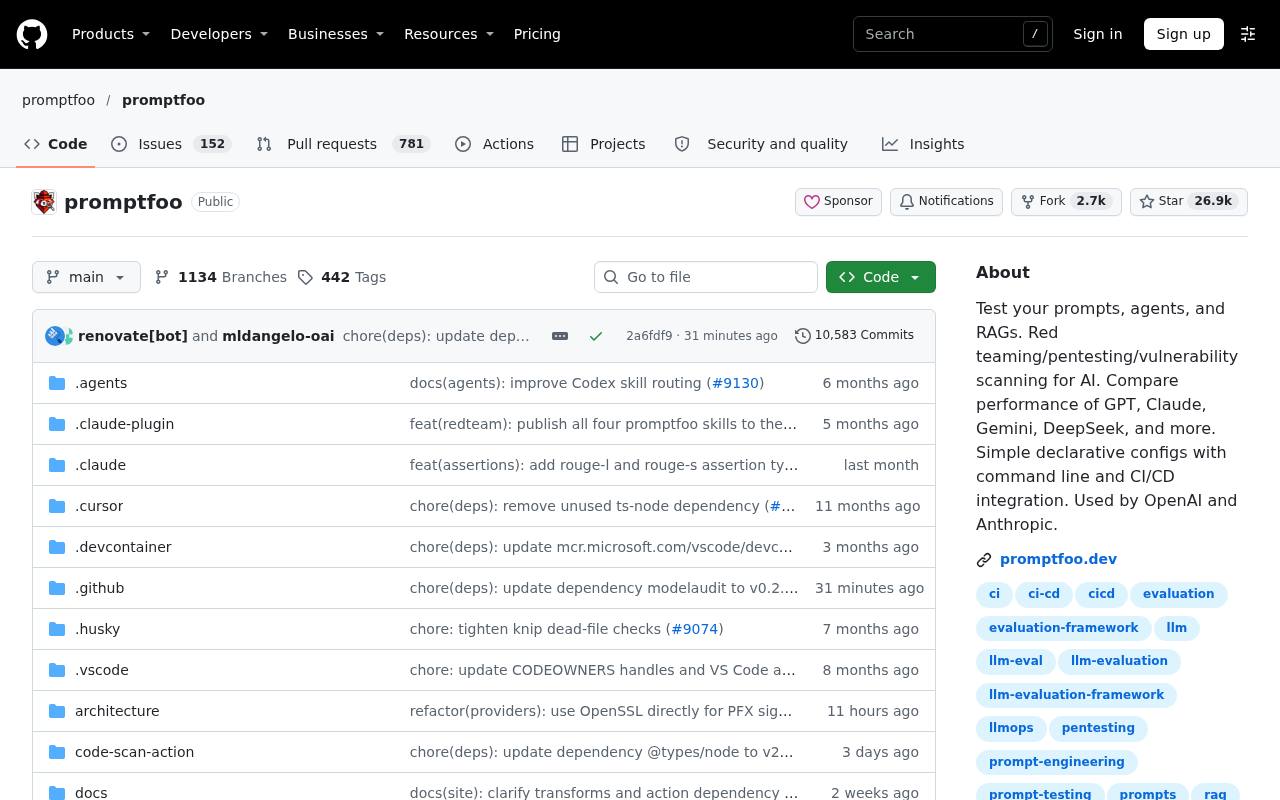
Often not for production scoring, since all four run evaluators. Many teams still keep a CI test runner such as promptfoo or DeepEval for checks that run on every pull request, and send results to the platform.
Sources and verification
Prices were read from each vendor's own pricing page on 26 November 2026; plan terms vary by billing period and change often. These are source links, not evidence that ReviewRamble ran controlled benchmarks.
- LangChain: LangSmith pricing
- Langfuse: Pricing
- Arize: Pricing
- Braintrust: Pricing
- Langfuse on GitHub; Arize Phoenix on GitHub
Editorial disclosure: this article contains no proprietary benchmark measurements and no affiliate-sponsored rankings.