
Self-hosted AI: 12 apps to run on your own server, ranked
Share this page:XLinkedInFacebookRedditWhatsAppEmail
By ReviewRamble editors ·
Every app on this list runs on a machine you control, and every one ships with at least one default you should change before anyone else can reach it. We ranked twelve self-hosted AI apps by our review ratings (out of 5), and for each one we say what it is for and how it is set up out of the box.
Two habits cover most of the risk. Keep these apps on localhost, a VPN or Tailscale until a password or sign-in is in place, and pin a release so you patch on purpose. Several of them published dozens of security advisories in 2026 alone.
The ranking
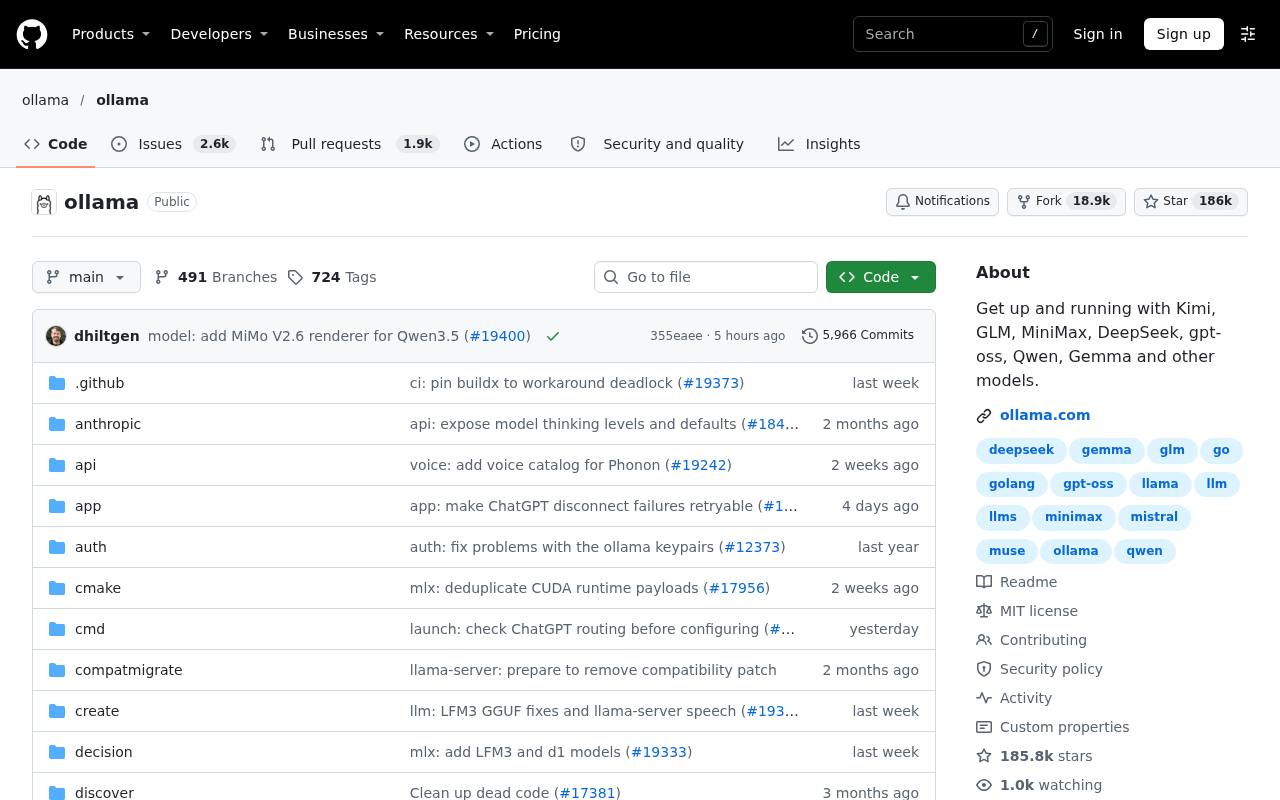
- Ollama (4.6) downloads open models and runs them behind a local API that most local chat apps can use as their backend. It binds to 127.0.0.1 with no authentication, so setting OLLAMA_HOST to 0.0.0.0 opens the whole API to anyone who can reach port 11434. SentinelOne and Censys counted 175,000 servers exposed that way in January 2026, and versions before 0.17.1 carry CVE-2026-7482, rated 9.1.
- Open WebUI (4.6) gives a team a private ChatGPT-style portal in front of Ollama and any OpenAI-compatible API, with groups, LDAP, OAuth, SCIM and two-factor sign-in. The first account created becomes admin, and the official Docker image turns Scarf and Chroma telemetry off. The project published 159 security advisories in 2026, one of them critical, and its :main tag follows the main branch, so pin a version tag in production.
- Immich (4.6) replaces Google Photos on a home server: it backs up your phone and runs face grouping and photo search in its own machine-learning container. Face data and search embeddings stay on your server. The docs advise against exposing port 2283 directly; put it behind a VPN, Tailscale or a reverse proxy with TLS. Of its 36 advisories, 35 came in 2026, including a critical one-click account takeover.
- Dify (4.5) lets non-engineers build and maintain internal chatbots and RAG apps in a visual editor. Its Docker Compose stack runs about ten services, among them a code sandbox and an SSRF proxy, and keeps your data in your own Postgres and vector store. It had 13 advisories in 2026, including cross-tenant data disclosure and an unauthenticated SSRF, and SSO is an Enterprise feature.
- LibreChat (4.4) is an MIT-licensed company chat portal across OpenAI, Anthropic, Google, AWS Bedrock and local models, with agents and MCP. Registration is open by default and the first user becomes admin, so turn off ALLOW_REGISTRATION or put SSO in front before you share the link. OpenTelemetry tracing is off by default, and 24 advisories were published in 2026.
- n8n (4.4) runs automations that put AI steps inside business workflows, and it is free to self-host for internal use. A self-hosted instance reports diagnostics, version checks and template requests to n8n until you set three environment variables to false. GitHub lists more than 200 advisories for 2026, 19 of them critical, and many need a logged-in user, which makes the question of who can edit workflows a security decision.
- AnythingLLM (4.3) turns a folder of documents into a private chatbot, as a single-user desktop app or a multi-user Docker server. Anonymous PostHog telemetry is on until you set DISABLE_TELEMETRY=true; the README says chats and documents are never sent. Its 25 advisories include a high-severity remote code execution in an agent skill in May 2026, so keep the server edition behind a login and a VPN.
- Onyx (4.3) searches and answers over your company's apps, such as Google Drive, Slack, Confluence and Jira, from your own servers. The first account becomes admin, and anonymous telemetry goes to telemetry.onyx.app unless DISABLE_TELEMETRY=true is set. On the free Community edition, stored connector credentials are not AES-encrypted and each connector is visible either to every user or only to its creator; finer permissions need the paid Business licence.
- LocalAI (4.1) answers OpenAI and Anthropic API calls with local models for chat, speech, images and video, even on a machine with no GPU. It binds to port 8080 on every interface with authentication off until you set LOCALAI_API_KEY, LOCALAI_AUTH=true or a GitHub or OIDC client ID, and its API keys carry full admin rights. Two critical-rated SSRF flaws hit its model install endpoint in 2026.
- RAGFlow (4.0) is a ready-made document question-and-answer app with layout-aware parsing, documented to need a 4-core, 16 GB server. Documents and chats stay in its own MySQL, MinIO and Elasticsearch or Infinity containers, and its tracing runs only if you configure a collector. Five of its eight advisories are critical, remote code execution among them, so it belongs behind a VPN.
- PhotoPrism (4.0) is a photo archive that tags pictures and recognises faces with models on your own server; you set the admin password in the compose file before the first start. Place lookups go to PhotoPrism's geocoding API and MapTiler unless you set PHOTOPRISM_DISABLE_PLACES. Since the October 2026 upgrade, MCP access for AI assistants is on by default for eligible users, and PHOTOPRISM_DISABLE_MCP turns it off.
- Langflow (3.8) is an MIT-licensed visual builder for agents and RAG pipelines that you can expose as APIs or MCP servers. Packaged releases disable auto-login, so set LANGFLOW_SUPERUSER_PASSWORD, and telemetry goes to Segment until you set DO_NOT_TRACK=True. It had 33 advisories in 2026, 16 of them critical, and attackers exploited CVE-2026-33017 within 20 hours of disclosure to take the API keys stored in flows. Patch it weekly and never expose it directly.
What we left out
Jan (4.2) is a desktop app for one person, and its local API needs no key unless you set one. Khoj (3.2) still runs on your own server, but its cloud closed in April 2026 and its makers now focus on other products. changedetection.io (4.3) and Dawarich (4.0) are well-reviewed self-hosted apps whose AI is optional or absent. changedetection.io has no password until you set one, and Dawarich ships with a placeholder secret key on plain HTTP.
For wider rankings, see our lists of open-source tools to run LLMs locally and open-source AI chat apps.