
Vercel vs Netlify vs Cloudflare Pages vs AWS Amplify: Where to Deploy an AI App
By ReviewRamble editors ·
Quick verdict
Vercel is the smoothest place to ship a Next.js AI app, with the longest function time limits here and a model gateway that adds no markup. Cloudflare is the cheapest at scale, because it bills CPU time rather than waiting time and charges nothing for bandwidth, though new projects should now go on Workers rather than Pages. Netlify is the simplest way to add AI to a site without signing up to model providers, since its AI Gateway injects the keys for you, but its 60-second limit on ordinary functions is the tightest of the four. AWS Amplify suits teams already committed to AWS who want Bedrock models behind sign-in, and is the weakest choice for streaming chat from Next.js.
Comparison at a glance
| Vercel | Netlify | Cloudflare Pages / Workers | AWS Amplify | |
|---|---|---|---|---|
| Entry paid plan | Pro $20/month per developer, with $20 of usage credit | Personal $9/month (1,000 credits); Pro $20/month, unlimited members (3,000 credits) | Workers Paid from $5/month per account | Pay as you go; no seat fees |
| Free tier | Hobby: 100GB transfer, 1M function calls, 4 CPU-hours | 300 credits a month | 100,000 requests a day, 10ms CPU per request | 12 months: 1,000 build minutes, 15GB transfer, 500,000 SSR requests |
| Longest normal request | 300s on Hobby; up to 800s on Pro (1,800s in beta) | 60s synchronous; 15 min for background functions | No wall-clock limit on duration; up to 5 min CPU (30s default) on Paid | Not published on the quotas page |
| Streaming responses | Yes; edge runtime must start within 25s and can stream for 300s | Yes, up to 20MB per streamed response | Yes | Next.js streaming not supported |
| Model gateway | AI Gateway: provider list price, no token markup | AI Gateway: keys injected automatically, billed in credits ($1 = 180 credits) | AI Gateway: core features free; 5% fee on Unified Billing credits | Amplify AI kit on Amazon Bedrock |
| Run models on the platform | No (gateway only) | No (gateway only) | Workers AI: 10,000 neurons a day free, then $0.011 per 1,000 | Bedrock, billed by AWS |
| Bandwidth | Pro: 1TB included, then from $0.15/GB | 20 credits per GB (about $0.13) | No egress charges | $0.15 per GB after the free tier |
| Billed for time spent waiting on a model | No: Active CPU excludes I/O waits, but provisioned memory is billed while running | Yes: compute is billed per GB-hour | No: CPU time only | Yes: SSR billed per GB-hour of duration |
Why AI apps break ordinary hosting assumptions
A normal web page answers in a few hundred milliseconds. An AI request is different: your server sends a prompt, then waits ten, thirty or ninety seconds while a model writes its answer, streaming words back to the reader as they arrive. Agents that call tools in a loop can run for minutes. That turns three dry platform details into the whole decision: how long a function may run, whether it can stream, and whether you pay for the time it spends waiting.
The last point is where the bills diverge most. On a platform that charges for wall-clock time, a chat request that spends 40 seconds waiting on a model costs 40 seconds of compute even though your code did almost nothing. Cloudflare charges only for CPU time. Vercel charges Active CPU, which excludes waiting, plus memory for as long as the instance runs. Netlify and Amplify bill by duration.
Vercel: built around the AI SDK
Vercel makes Next.js and maintains the AI SDK, the open-source TypeScript library many teams use to stream model replies into a React interface. Deploying a Next.js chat app there involves the fewest surprises. Its AI Gateway routes calls to many model providers through one key and, per its pricing docs, charges the provider's list price with no markup, including when you bring your own key. v0, Vercel's app-building agent, deploys straight to it.
Strengths: the longest standard function limits here (300 seconds on the free plan, up to 800 on Pro, 1,800 in beta); Active CPU billing that does not charge for time spent waiting on a model; Vercel Workflows for jobs that must pause and resume over minutes or months; streamed responses are exempt from the 4.5MB response limit.
Weaknesses: per-developer seats at $20 a month each add up for larger teams. Functions run in one region by default (Washington, D.C.), so put them near your database. Gateway add-ons such as team-wide zero data retention, regional hosting (5% of inference cost) and BYOK without fallback ($0.20 per 1,000 requests) cost extra. Hobby users cannot buy extra usage; when a limit is hit, the feature pauses for up to 30 days.
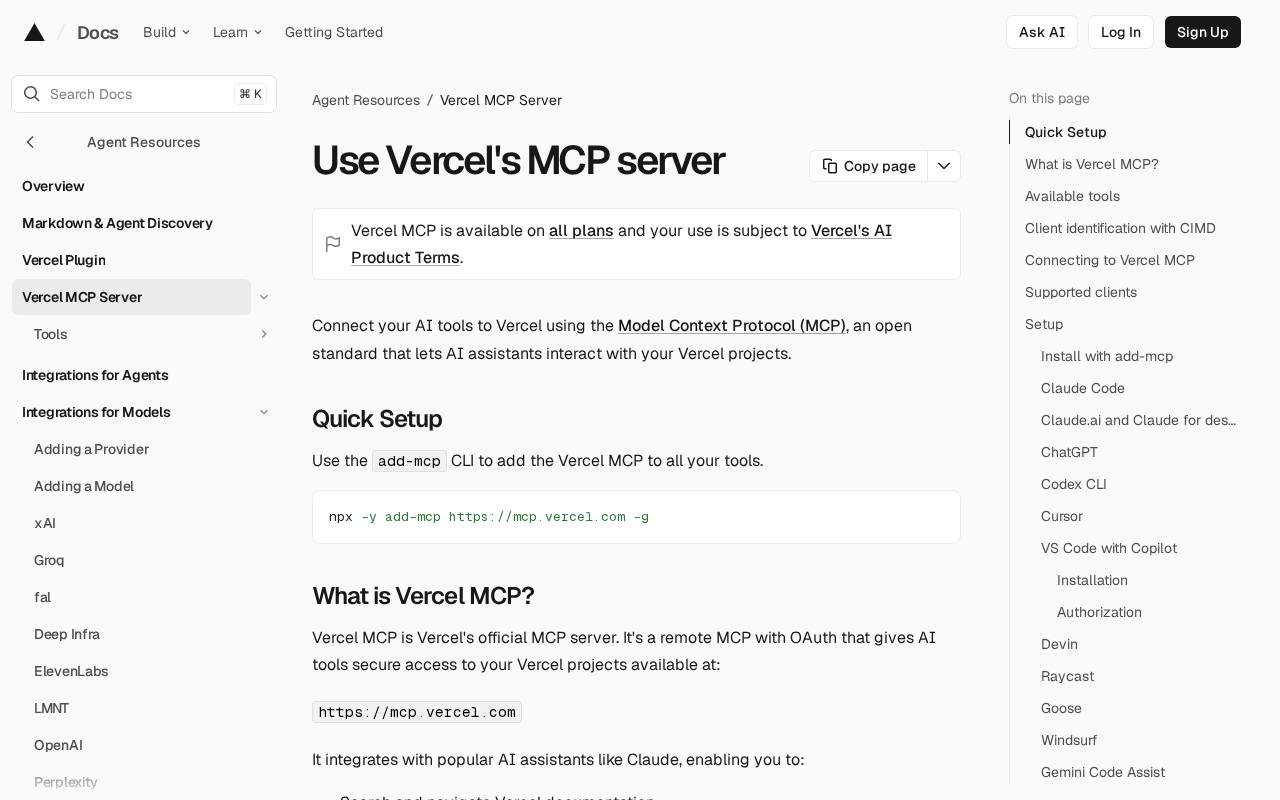
Pricing (vercel.com/pricing, 26 November 2026): Hobby is free with 100GB of data transfer, 1 million function invocations, 4 hours of Active CPU and 360 GB-hours of memory a month. Pro is $20 a month per developer with $20 of usage credit, 1TB of transfer (then from $0.15 per GB), $0.60 per million invocations, Active CPU from $0.128 an hour and memory from $0.0106 per GB-hour. New Pro teams start with a $200 on-demand budget you can change or hard-cap. Vercel's official MCP server lets a coding agent read deployment logs; our review explains why its OAuth grant needs scoping.
Netlify: AI without the API keys
Netlify's distinctive move is its AI Gateway. On any credit-based plan, including the free one, Netlify sets the environment variables that the official OpenAI, Anthropic, Gemini and OpenRouter libraries read, so your function can call Claude or GPT without you opening an account with either. Token costs convert into Netlify credits at 180 credits per dollar of model usage, and the gateway does not store prompts or outputs.
Strengths: the fastest route from idea to a working AI feature; one bill for hosting and models; Pro covers unlimited team members for $20 a month; background functions run for up to 15 minutes; streamed responses up to 20MB.
Weaknesses: ordinary synchronous functions stop at 60 seconds and that is not configurable, which is short for a long model reply or an agent loop. The gateway caps prompts at 200,000 tokens, does not support batch inference, and has per-minute credit limits by plan (90 credits on Free, 1,800 on Pro). Because everything draws from one credit pool, a popular AI feature can eat the credits your bandwidth and deploys also need; Netlify recommends rate-limiting rules on AI endpoints.
Pricing (netlify.com/pricing, 26 November 2026): Free has a 300-credit limit; Personal is $9 a month with 1,000 credits; Pro is $20 a month with 3,000 credits and unlimited members; Enterprise is custom. A production deploy costs 15 credits, compute 10 credits per GB-hour, bandwidth 20 credits per GB and web requests 2 credits per 10,000. Pro credit packs are $10 for 1,500 credits. Our review of Netlify's MCP server warns that an eager agent can spend a month of credits quickly.
Cloudflare: cheapest at scale, with a naming change
First, the housekeeping. Cloudflare's own Pages documentation now opens by asking whether you are sure you want Pages, says Workers supports most Pages use cases, and tells you to start new projects on Workers. Pages still works and is not announced for retirement, and Pages Functions already run on Workers and count against the same quota. For a new AI app, read "Cloudflare Pages" in this comparison as Workers with static assets.
Strengths: billing that suits AI almost perfectly, since you pay for CPU time, not for time spent waiting on a model, and there is no charge or limit on duration; no bandwidth fees, and static asset requests are free and unlimited; Workers AI runs open models on Cloudflare's own GPUs with 10,000 free neurons (its billing unit) a day; AI Gateway's analytics, caching and rate limiting are free.
Weaknesses: Workers is not Node.js, so some npm packages need adjustment, and full Next.js support goes through an adapter rather than being native. The free plan allows only 10 milliseconds of CPU per request, and Workers AI cannot go past the daily free allowance without the paid plan. Pages' free plan allows 500 builds a month, one at a time, with a 25MiB per-file limit.
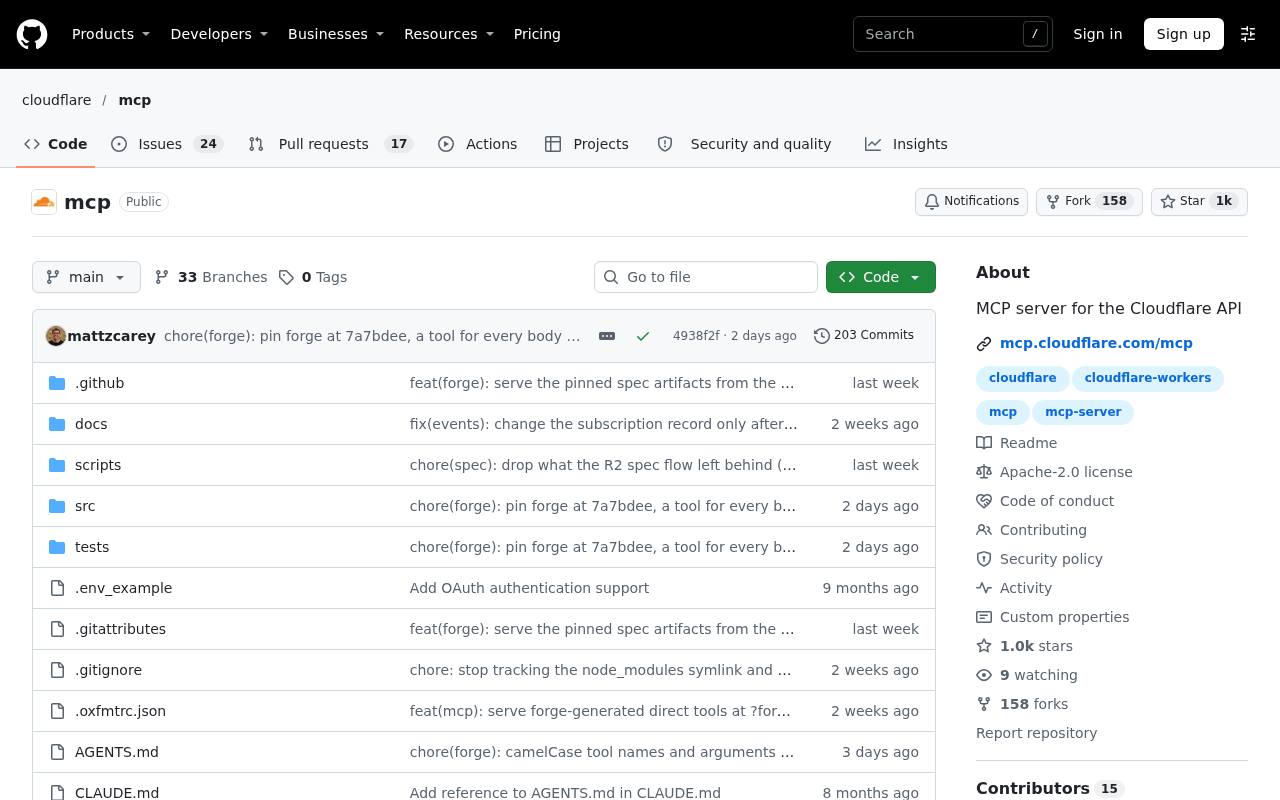
Pricing (developers.cloudflare.com, 26 November 2026): Workers Free gives 100,000 requests a day. Workers Paid has a $5 monthly minimum with 10 million requests and 30 million CPU milliseconds included, then $0.30 per million requests and $0.02 per million CPU milliseconds. Cloudflare's own example: 15 million requests a month at 7ms of CPU each costs $8. Workers AI is $0.011 per 1,000 neurons beyond the free allowance. AI Gateway's Unified Billing adds 5% to credits you buy through it. Cloudflare's MCP server exposes its whole API to an agent in four tools.
AWS Amplify: for teams already on AWS
Amplify Hosting deploys front ends and Next.js apps onto AWS, and Amplify's AI kit adds "AI routes" backed by Amazon Bedrock models. A conversation route stores chat history in DynamoDB automatically and runs through AppSync and Lambda, with access controlled by the same sign-in as the rest of your Amplify app. If your company already buys Bedrock and lives in AWS accounts, that integration is the reason to be here.
Strengths: no per-seat pricing; Bedrock models, IAM and the rest of AWS in the same account; conversation history and authorisation handled by the AI kit; low prices for modest traffic (AWS's own example of 10,000 daily users comes to $65.98 a month).
Weaknesses: AWS's documentation lists Next.js streaming, edge API routes and on-demand revalidation as unsupported, and supports Next.js versions 12 to 15 only. That rules out the usual AI SDK pattern of streaming a reply from a Next.js route handler, so streaming chat has to go through the AI kit or a separate Lambda. New accounts start with a quota of 25 apps per region. It is the most AWS-shaped of the four, which is a strength only if you already speak AWS.
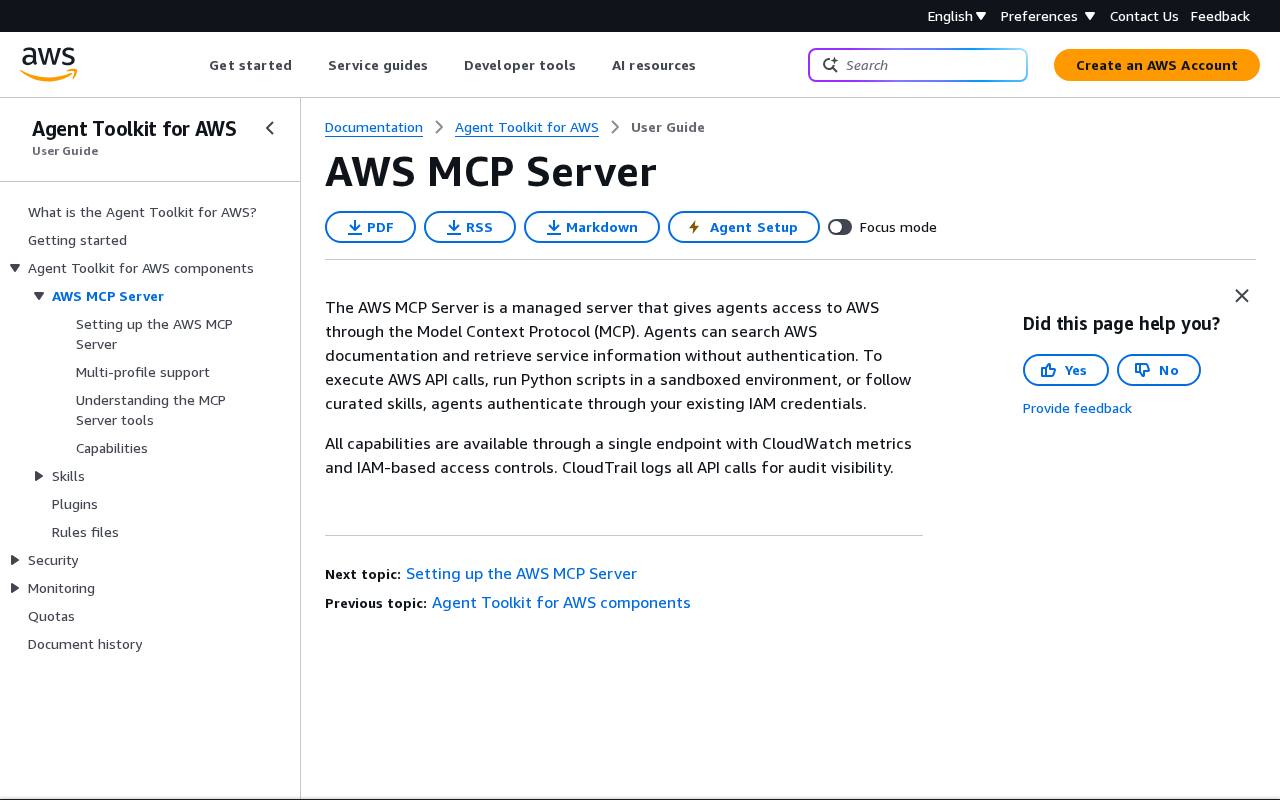
Pricing (aws.amazon.com/amplify/pricing, 26 November 2026): the pricing page describes a 12-month free tier with 1,000 build minutes, 5GB of storage, 15GB of data transfer, 500,000 SSR requests and 100 GB-hours of SSR duration a month. After that: $0.01 per build minute, $0.023 per GB stored, $0.15 per GB served, $0.30 per million SSR requests and $0.20 per GB-hour of SSR duration. A web application firewall adds $15 a month per app plus WAF charges. Bedrock usage is billed separately by AWS. AWS's MCP server lets an agent call AWS APIs within your IAM policies.
A worked example: a chat feature with long replies
Imagine 1 million chat requests a month, each spending 20 seconds waiting on a model and about 50 milliseconds of actual CPU work. On Cloudflare Workers Paid, that is 50 million CPU milliseconds: the $5 base covers 30 million, and the other 20 million cost $0.40, so around $5.40 before model costs. On platforms that bill duration, the same traffic is about 5,600 GB-hours at 1GB of memory, which on Netlify's credit rates is roughly 56,000 credits, far beyond Pro's 3,000. On Vercel, Active CPU is small, but provisioned memory is billed while each instance runs; Fluid compute lets one instance serve many waiting requests at once, which is how Vercel keeps this cost down. Model tokens will still dwarf all of these numbers.
Which one for which job
| Your situation | Our pick | Why |
|---|---|---|
| Next.js chat app using the AI SDK | Vercel | Native support, long limits, no gateway markup |
| High traffic where every request waits on a model | Cloudflare Workers | CPU-only billing and no bandwidth fees |
| Adding an AI feature to a content site, fast | Netlify | AI Gateway works with no provider accounts |
| Long-running agent jobs | Vercel (Workflows) or Cloudflare | Vercel allows up to 800s, plus durable workflows; Cloudflare has no duration limit |
| Company already standardised on AWS and Bedrock | AWS Amplify | IAM, Bedrock and AI kit in one account |
| Running open models without a GPU bill | Cloudflare | Workers AI with a daily free allowance |
| A team of ten on one plan | Netlify Pro or Cloudflare | Netlify Pro has unlimited members; Cloudflare bills per account |
Our take: the right host depends less on features than on how your bill is measured. If your requests mostly wait on a model, CPU-time billing (Cloudflare, and Vercel's Active CPU) is the difference between a rounding error and a real invoice. Vercel is the comfortable default for Next.js teams, Cloudflare the one to grow into when traffic is large, Netlify the quickest way to try an idea, and Amplify the one your AWS administrator will already have approved. For the app builders that deploy to these hosts, see Bolt vs v0.
Frequently asked questions
Which host is best for streaming AI responses?
Vercel and Cloudflare. Vercel streams from Node.js functions for up to 300 seconds on Hobby and 800 on Pro, and its edge runtime must start a response within 25 seconds. Cloudflare Workers have no duration limit. Netlify streams up to 20MB within its 60-second synchronous limit. Amplify does not support Next.js streaming.
Do I pay for the time my function waits on the model?
Not on Cloudflare, which bills CPU time only. Vercel's Active CPU excludes waiting, but provisioned memory is billed while the instance runs. Netlify bills compute per GB-hour and Amplify bills SSR duration per GB-hour, so waiting costs money on both.
Should I use Cloudflare Pages or Workers for a new project?
Workers. Cloudflare's own Pages documentation says Workers supports most Pages use cases and recommends starting new projects there. Pages remains available and has not been announced for shutdown.
Does Vercel's AI Gateway add a markup?
No. Per Vercel's pricing docs, it charges the provider's list price with no markup or platform fee on tokens, including with your own key. Optional add-ons such as team-wide zero data retention and regional hosting cost extra, and you pay any payment processing fees.
Is the AI SDK tied to Vercel?
No. It is an open-source TypeScript library and runs on Netlify, Cloudflare and other hosts. It works best on Vercel because the platform's limits and defaults are designed around it, and least well on Amplify, where Next.js streaming is unsupported.
Which is cheapest for a small AI side project?
All four have free tiers that cover a side project. Cloudflare's free plan is the most generous on bandwidth but limits CPU to 10ms per request; Vercel Hobby gives the longest function time; Netlify's 300 free credits include AI model usage, which runs out quickly with large models.
Sources and verification
Prices and limits were checked on the vendors' own pages on 26 November 2026. These are source links, not evidence that ReviewRamble ran benchmarks.
- Vercel: Pricing, Functions limits, Hobby plan and AI Gateway pricing
- Netlify: Pricing, Functions configuration and AI Gateway
- Cloudflare: Workers pricing, Workers AI pricing, AI Gateway pricing, Pages and Pages limits
- AWS: Amplify pricing, Next.js support, Quotas and AI kit architecture
Editorial disclosure: this article contains no proprietary benchmark measurements and no affiliate-sponsored rankings.