
ChatGPT vs Claude vs Gemini vs Grok: Which AI Assistant Should You Choose in 2026?
By ReviewRamble editors ·
Quick verdict
ChatGPT is the most flexible starting point for people who want an all-purpose assistant; Claude is compelling for writing and sustained analysis; Gemini fits Google-heavy workflows; Grok is worth considering for people invested in its ecosystem. None wins every task.
Comparison at a glance
| Tool | Best suited to | Main caution |
|---|---|---|
| ChatGPT | General-purpose multimodal work, coding, research and broad app functionality | A wide feature surface can make plans and limits complicated |
| Claude | Long documents, editorial work, structured reasoning and code-oriented workflows | Availability and usage ceilings vary substantially by plan |
| Gemini | Google-connected productivity and research | Value depends on how much you use Google services |
| Grok | An alternative assistant from SpaceXSI (formerly xAI), with a product ecosystem centred on X | Product access and entitlements need close checking |
The decision is about workflow, not a benchmark score
The familiar question, "Which chatbot is smartest?", is no longer enough. All four assistants can summarise documents, brainstorm, explain code, and answer questions. A useful comparison asks what happens after the first response: Can you verify sources? Can you revise a large artefact without losing context? Can the assistant use your preferred productivity software? How much work can you finish before hitting plan limits?
For a researcher, a convincing paragraph without a checkable source is a failure. For a marketer, a technically accurate answer that requires significant rewriting may be equally unhelpful. For a developer, the key distinction may be whether a response becomes a reviewed patch in a real repository. Choose by completed work, not by an isolated prompt.
Where each assistant makes sense
ChatGPT (4.7) makes the strongest case as a single subscription covering varied tasks. Its attraction is the breadth of work people can bring to one interface, from writing and coding to image work and research. That breadth matters when a small team does not want to manage several separate tools. The trade-off is that individual features and quotas can differ by plan and may change.
Claude (4.6) is attractive when the work revolves around sustained writing, reviewing complex explanations, or iterating through lengthy technical material. Its companion coding workflows matter to engineers, but a Claude chat subscription should not be confused with unlimited API consumption. Evaluate it on revision quality: ask it to preserve constraints across three rounds of edits, rather than judging only its first draft.
Gemini (4.5) offers a particularly coherent proposition to households and organisations already paying for Google's storage and productivity products. Integration with the surrounding ecosystem can be more important than small perceived differences in answer quality. Check which specific Gmail, Docs, and other features are available in your country and plan before calculating the bundle's value.
Grok (3.8) should be evaluated as a distinct option, not simply called a substitute for ChatGPT. Its product and model lineup moves quickly; verify availability, usage terms and current access through the official pages of SpaceXSI, the company formerly called xAI. For many users, the practical test is whether its preferred interface and research workflow are genuinely better for their day-to-day questions.
How to compare them fairly
Use a five-task trial: (1) research a fast-changing issue with traceable primary links; (2) rewrite a 1,000-word draft to a strict style guide; (3) explain and fix a bug in code you own; (4) analyse a spreadsheet or long document; and (5) follow up with corrections while preserving all earlier constraints. Score factual accuracy, useful citations, consistency, total elapsed time and the amount of manual repair required.
Run each task on equivalent paid or free tiers where possible. Save the exact model, date and plan. A higher-priced tier with substantially larger allowances is not a fair proxy for the entry tier.
Pricing and privacy considerations
Treat consumer subscriptions, enterprise contracts, and developer APIs as three different purchasing decisions. An advertised monthly fee does not automatically cover API tokens, third-party integrations, enterprise governance or unrestricted use. Before uploading sensitive material, review retention, training settings and organisational controls; the consumer and enterprise experience may differ.
The real difference: what happens after the answer?
The first response is the least interesting part of the AI-assistant experience. Imagine a product manager trying to evaluate whether to enter a new market. She asks for the market size, principal competitors, and a recommendation. All four assistants can produce a polished report that looks convincing. The comparison starts when she asks where the numbers came from, introduces a contradictory filing, requests a revised table, and needs the final argument turned into a presentation her colleagues can challenge. A model that writes persuasively but resists correction is less useful than a slightly less elegant one that reliably preserves the evidence trail.
This is why chatbot leaderboards, while useful, are weak buying guides. A model may be strong at programming puzzles or abstract reasoning and still be awkward at retrieving a source, editing a document, or coordinating with your software. The product around the model (file handling, search, integrations, projects, limits, privacy, export options) is part of what you are purchasing. Model names alone are not stable proxies for the consumer experience, because vendors periodically change defaults and gate particular capabilities by plan.
ChatGPT: the broadest general-purpose argument
ChatGPT's appeal is the breadth of activities it tries to support in a single product: conversations, analysis of uploaded material, code-oriented assistance, research, visual work and task-specific tools. That makes it especially attractive to someone whose day alternates between writing an email, inspecting a spreadsheet, debugging a script and evaluating a business idea. Breadth is not the same as best-in-class execution in every category. The risk is that teams confuse the existence of a feature with the quality or availability of that feature on the plan they intend to buy.
For a small company, the realistic question is whether ChatGPT removes subscriptions or just becomes another tab. Test three concrete processes end-to-end: turn a messy CSV into defensible findings; turn a policy document into an accurate executive summary; and turn rough notes into copy that survives two rounds of stakeholder edits. Measure correction time. If the user must continually restate constraints, the supposed productivity gain shrinks.
Claude: editorial continuity and technical depth
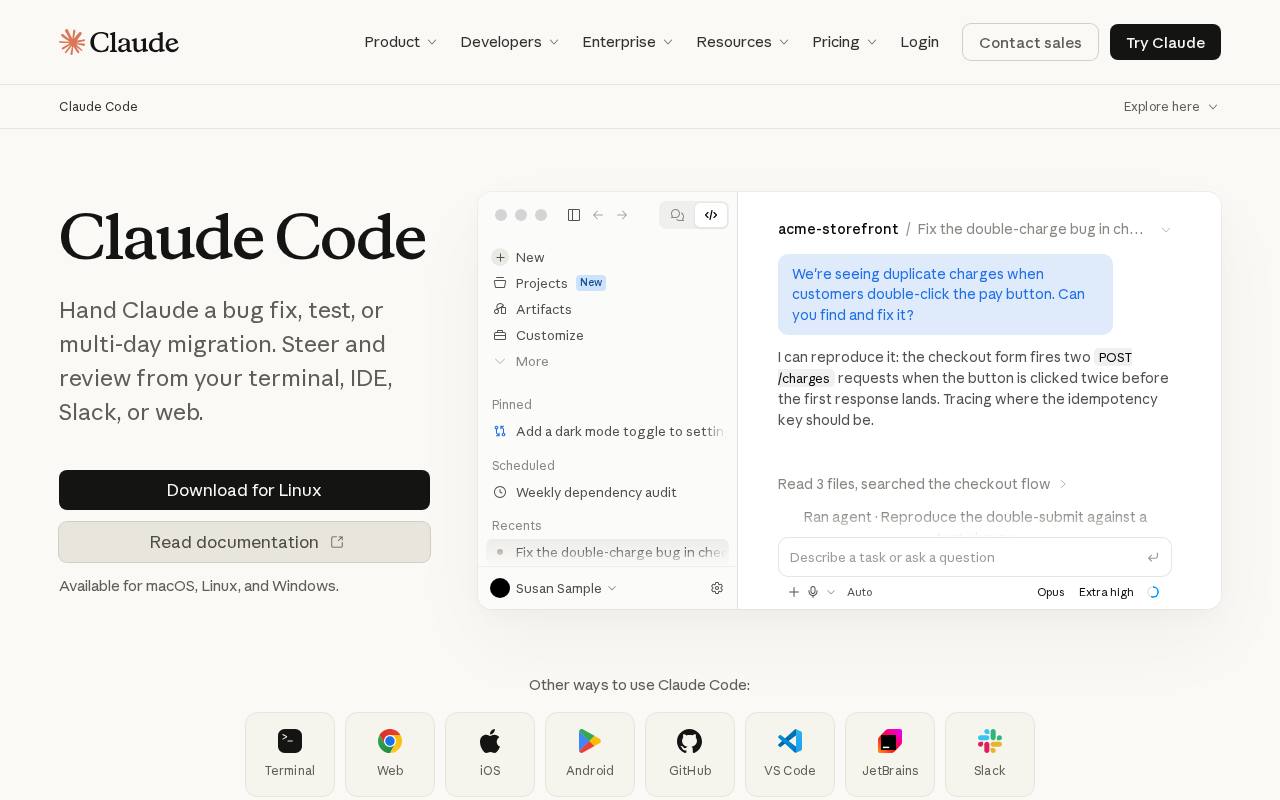
Claude deserves consideration for work where an assistant must follow a long argument rather than answer a quick question. Think contract analysis, complex architecture discussions, or rewriting a document without flattening its voice. Developers should distinguish Claude's consumer chat product from Claude Code and the underlying API. Those are related offerings but not interchangeable entitlements. A successful chatbot session does not prove an organisation can deploy the same workflow at scale within a predictable budget.
A revealing editorial test is to supply a 2,000-word draft containing five intentional factual uncertainties, a style guide, and a demand that the assistant flag unsupported assertions. Ask for a revision and then request a second revision that changes the tone but preserves every factual caveat. What matters is not whether the first version is fluent; it is whether uncertainty remains visible after multiple edits.
Gemini: the integration case
Gemini's strongest purchase argument is often contextual rather than conversational. For someone who works in Google's products, the value of an assistant can hinge on how naturally it operates alongside documents, email, calendars and search. But integration claims require specificity: a feature available in one Google AI plan, region, or Workspace edition should not be assumed to exist in every Google account. Review the actual eligibility and administrative settings for the subscription you are considering.
When comparing Gemini, run an integration test with an ordinary workday instead of a synthetic riddle. Can the assistant locate the relevant materials, distinguish a current version from an obsolete one, and produce a result without exposing information from unrelated documents? This is where organisational permission design becomes more important than a flashy demo.
Grok: judge the product, not the personality
Grok is frequently positioned through its connection to the SpaceXSI and X ecosystem and its particular conversational experience. Neither an assertive voice nor rapid access to online discussion should be confused with verification. For news, public claims and fast-moving topics, require a distinction between a primary source, a journalist's reporting and user-generated commentary. A plausible synthesis of social posts is not a substitute for evidence.
Grok may be worth a subscription for users who prefer its workflow or specific product characteristics. It is not enough to say it is 'more current' or 'less filtered' without defining the task and testing the output. A useful test is to ask all four systems to explain a new technology announcement, then trace every concrete specification to vendor documentation.
An apples-to-apples purchasing test
Run the same five assignments on each product using the same input files and a fresh session. Record the date, subscribed plan, selected model, whether web access was enabled, number of follow-up prompts, citations that survived manual checking, and time needed to fix the deliverable. Grade accuracy (40%), follow-up reliability (25%), workflow fit (20%), and cost and limits (15%). Those weights are a proposed editorial rubric, not measured product scores. For sensitive organisational use, make privacy and access controls pass/fail requirements rather than another weighted point.
One valuable red-team prompt is to give the system an apparently authoritative document that contains an instruction unrelated to the task. Does it treat that instruction as source material or as an order to obey? Another is to provide two contradicting spreadsheets and ask for a joined result. An assistant's willingness to ask for clarification can be a strength when an invented answer would contaminate the final report.
Privacy, subscriptions and the false promise of 'unlimited'
A consumer subscription should never be treated as blanket permission to upload customer records, source code or internal documents. Review retention, training, enterprise controls and connector authorisation for the exact product and account tier. Similarly, API pricing is not necessarily included with a chat subscription. For a team of 20 people, a low headline seat price is almost meaningless if the plan lacks required administrative control or imposes usage ceilings during important workflows.
The best purchase is often asymmetric: use one default assistant for everyday work and add a specialised second tool only when it demonstrably reduces rework. Avoid subscribing to four assistants simply because different online rankings name different winners.
Final verdict
Start with ChatGPT for one broad-purpose assistant; shortlist Claude for intensive writing and engineering workflows; give Gemini first consideration if Google integration is the deciding factor; evaluate Grok when its specific model experience or ecosystem is important. A one-week trial using real work is more informative than a universal leaderboard.
For two-way detail, see our ChatGPT vs Claude and ChatGPT vs Gemini comparisons.
Sources and verification
The following vendor-operated resources were consulted for product positioning, features or pricing structure. Plan terms may vary by region, billing frequency and date. These are source links, not evidence that ReviewRamble ran controlled benchmarks.
- chatgpt.com
- claude.com
- gemini.google
- x.ai
- docs.x.ai: The X Subscription pricing
- Wikipedia: SpaceXAI, on the October 2026 rename to SpaceXSI
Editorial disclosure: this article contains no proprietary benchmark measurements and no affiliate-sponsored rankings.