
Analysis Agent Frameworks & Automation
LangGraph vs CrewAI vs Pydantic AI vs AutoGen: Agent Frameworks Compared, and Where AutoGen Went
By ReviewRamble editors ·
Quick verdict
LangGraph is the framework for agents that must survive restarts, pause for a human and show every step. Pydantic AI is the better default for Python teams who want typed, testable agent code without a graph. CrewAI is the fastest way to a working multi-agent demo, and its own Flows feature is what production teams end up writing. AutoGen is no longer a choice: Microsoft archived the repository on 20 November 2026 and points new users to Microsoft Agent Framework, so that is the fourth framework this comparison weighs.
AutoGen's status, checked on 26 November 2026
AutoGen's GitHub repository is archived and read-only as of 20 November 2026. Its README says Microsoft is not providing bug fixes, security fixes, new features or support, calls Microsoft Agent Framework "the enterprise-ready successor to AutoGen" and recommends it for new projects. The last Python release was v0.7.5 on 30 September 2025. Microsoft's documentation describes Agent Framework as the direct successor to both AutoGen and Semantic Kernel, built by the same teams, and publishes a migration guide from AutoGen. Agent Framework itself is current: version 1.26.0 of the Python package was published to PyPI on 12 November 2026, and the .NET package is on 1.28.0 on NuGet.
So the useful comparison for anyone who searched for AutoGen is LangGraph, CrewAI and Pydantic AI against Agent Framework. AutoGen code that already runs keeps running, but nobody will patch it.
Comparison at a glance
| LangGraph | CrewAI | Pydantic AI | Agent Framework (AutoGen successor) | |
|---|---|---|---|---|
| Core idea | Agents as explicit graphs of steps and state | Crews of role-playing agents; Flows for fixed steps | Typed agents with validated inputs and outputs | Agents plus graph workflows, in Python and .NET |
| Languages | Python, JavaScript | Python | Python | Python, C#; Go in preview |
| Licence | MIT | MIT | MIT | MIT |
| Latest release | 1.2.24, 20 November 2026 | 1.15.45, 24 November 2026 | v2.75.0, 25 November 2026 | Python 1.26.0, 12 November 2026 |
| GitHub stars | About 45,400 | About 61,300 | About 21,400 | Not checked; see below |
| Durable state and human approval | Checkpointers, built in | In Flows | Durable execution on engines such as Temporal and DBOS | Workflow checkpointing, built in |
| Paid companion | LangSmith tracing and hosting | CrewAI AMP | Logfire and Pydantic AI Gateway | Microsoft Foundry and Azure |
What the framework actually decides
An agent framework decides who controls the next step. In LangGraph and Agent Framework workflows, you draw the path: this node runs, then that one, and a person must approve before the refund goes out. In a CrewAI crew, the agents negotiate among themselves who does what. Pydantic AI sits closer to plain code: one agent, typed tools, a validated result, and you write the loop around it.
The more freedom you give the model, the faster the demo and the harder the debugging. Most teams that ship an agent to customers end up with explicit steps somewhere, which is why CrewAI added Flows and Agent Framework added workflows. Before you pick any of them, check whether you need a framework at all; our agent frameworks guide and agent architecture guide argue that plain SDK code is often enough.
Pricing, as of 26 November 2026
All four frameworks are free and MIT-licensed. You pay for model calls and for the companion services each vendor sells.
LangGraph pairs with LangSmith: Developer free for one seat and 5,000 base traces a month, Plus $39 per seat a month with 10,000 base traces, Enterprise custom. Running agents on LangSmith's hosting is metered separately in LangChain Standard Units at $1 each.
CrewAI AMP, the hosted platform, has a free Basic tier with 50 workflow executions a month and an Enterprise tier by quote, with SSO, role-based access and deployment in CrewAI's cloud, your VPC or your own infrastructure. No price is published between the two.
Pydantic sells Logfire for tracing: Personal is free with 10 million records a month, Team $49 a month and Growth $249, each with 10 million records and then $2 per million. Its AI Gateway adds no markup on your own keys and 5% on built-in providers (3% on Growth).
Agent Framework has no paid tier of its own. Microsoft's pitch is hosting on Microsoft Foundry and other Azure services, which bill at Azure rates.
LangGraph
LangGraph gives you explicit control over which step runs next, what state is kept and where a person must sign off, and its 1.0 release froze the core graph API. Durability depends on the checkpointer: the docs warn that the in-memory one loses everything on restart and point production users to Postgres. It remains the reference point other orchestration frameworks are measured against.
Strengths: resumable, inspectable agents; human-in-the-loop as a first-class pattern; the deepest tracing through LangSmith; Python and JavaScript.
Weaknesses: more code than a plain agent loop and a steep learning curve; the best tooling around it is paid and per seat; overkill for a single agent with a few tools.
CrewAI
CrewAI's role, goal and task model is easy to explain to a non-engineer, which is much of its appeal, and it has the most GitHub stars of the three active Python frameworks here. Releases arrive nearly weekly. The trouble starts in production: a hierarchical crew fans out into many model calls, default logging is noisy, and teams move to Flows, explicit steps and state, at which point the code looks like LangGraph with different names.
Strengths: the quickest route from idea to several cooperating agents; a readable mental model; a hosted platform with a free tier.
Weaknesses: hard to steer once a crew grows; a March 2026 CERT/CC note covered four vulnerabilities in its tools, and CrewAI's answer included removing the Code Interpreter tool; anonymous telemetry is on by default; AMP pricing above the free tier needs a sales call.
Pydantic AI
Pydantic AI brings typed Python to agents. Tool arguments and structured outputs are validated against Pydantic models, so a malformed model response fails loudly instead of flowing into your database, and dependency injection lets tests swap in test models. It is the framework for agent code that has to be maintained, not just demoed.
Strengths: validation everywhere; easy testing; model-agnostic; a free tracing tier generous enough for small teams.
Weaknesses: the release pace is extraordinary, so pinning versions is not optional; the web-fetch tool and UI adapters have accumulated security advisories; version 2 reshaped the API, so older tutorials and examples can mislead.
Microsoft Agent Framework (in place of AutoGen)
Agent Framework merges AutoGen's simple agent abstractions with Semantic Kernel's enterprise features (session state, type safety, middleware, telemetry) and adds graph workflows with checkpointing for long-running and human-in-the-loop work. It speaks MCP for tools and supports Foundry, Azure OpenAI, OpenAI, Anthropic and Ollama models, among others. A newer Harness Agent bundles planning, context compaction, file access and tool approval for long tasks.
Strengths: first-class C# as well as Python, which nothing else here offers; the official landing spot for AutoGen and Semantic Kernel code, with migration guides; built-in OpenTelemetry tracing.
Weaknesses: younger than LangGraph, with a shorter production record for Python; the Go SDK is a preview missing core features; Microsoft's docs say third-party models and servers are used at your own risk. When we checked on 26 November, the GitHub repository address returned an error, though PyPI and NuGet showed current releases, so we have not quoted its star count.
Winner by use case
- An agent that waits days for a manager's approval and must not lose its place: LangGraph.
- A Python service where wrong-shaped output would corrupt data: Pydantic AI.
- A quick multi-agent prototype to show stakeholders: CrewAI, with a plan to move the shipping version to Flows.
- A .NET shop, or a team on Azure and Foundry: Microsoft Agent Framework.
- Existing AutoGen code: migrate to Agent Framework using Microsoft's guide, or to LangGraph if you are leaving Azure. Do not start anything new on AutoGen.
- One agent with three tools: probably none. A provider SDK and a loop will do.
FAQ
Is AutoGen dead?
It is archived. Microsoft made the repository read-only on 20 November 2026 and says it will not ship bug fixes, security fixes or features. The code is MIT-licensed, so anyone may fork it, but whoever forks it owns every future patch. AG2, a community fork from 2024, is a separate project.
Is Microsoft Agent Framework just AutoGen renamed?
No. Microsoft describes it as the successor to both AutoGen and Semantic Kernel, built by the same teams. Agent concepts will look familiar to AutoGen users, but the APIs differ, so migration means rewriting code against the new packages.
Which framework is easiest to learn?
CrewAI for a first demo, Pydantic AI for code a Python developer will recognise, LangGraph last, because you have to think in nodes, edges and state before anything runs.
Do I need LangSmith to use LangGraph?
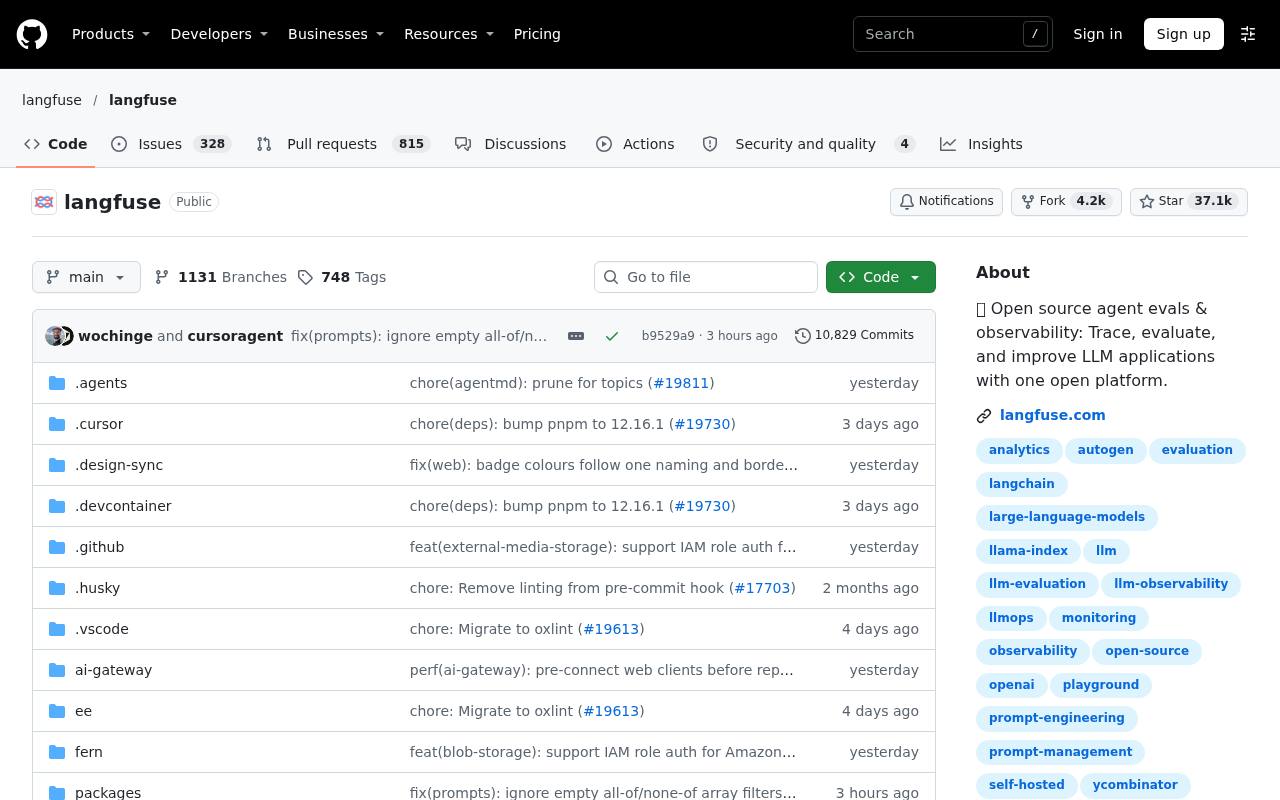
No. LangGraph is MIT-licensed and runs anywhere. LangSmith adds tracing and hosting; open alternatives such as Langfuse also trace LangGraph agents. Our LangSmith vs Langfuse vs Arize Phoenix vs Braintrust comparison covers the choice.
What about the OpenAI Agents SDK or Google ADK?
Both are light agent SDKs worth considering if you are committed to one provider's models; see our reviews of the OpenAI Agents SDK and Google ADK.
Sources and verification
Release numbers and stars were read from GitHub, PyPI and NuGet on 26 November 2026, and prices from each vendor's pricing page the same day. These are source links, not evidence that ReviewRamble ran controlled benchmarks.
- AutoGen: GitHub repository and archive notice
- Microsoft Learn: Agent Framework overview and migration guide from AutoGen
- PyPI: agent-framework
- LangGraph: GitHub; LangChain: LangSmith pricing
- CrewAI: GitHub and pricing
- Pydantic AI: GitHub; Pydantic: pricing
Editorial disclosure: this article contains no proprietary benchmark measurements and no affiliate-sponsored rankings.